ByJohn A
Opening Rooflights for Flat Roofs: A Practical Guide to Ventilation, Daylight and Design
Natural light can make a flat-roofed room feel brighter and more comfortable, while an opening rooflight can also provide a practical way to improve ventilation. These roof installations are useful in homes, offices, extensions, kitchens, workshops and commercial buildings where wall windows may not provide enough daylight or airflow.
Choosing the right rooflight involves more than selecting a suitable size. Glazing, opening method, roof construction, ventilation requirements, insulation and installation details all affect performance. This guide explains the main points to consider before selecting opening rooflights for flat roofs.
Why Add an Opening Rooflight to a Flat Roof?
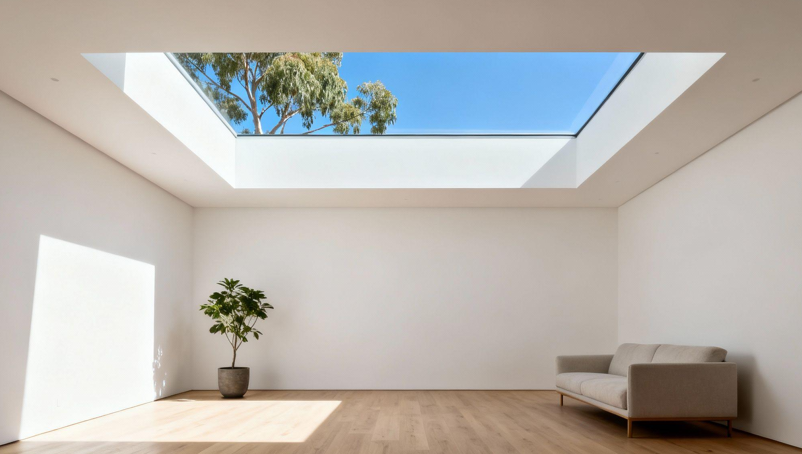
Flat roofs often cover spaces that receive limited daylight. Rooms positioned away from external walls can feel darker because sunlight has fewer opportunities to enter from the sides. A rooflight introduces light from above, helping distribute daylight across a larger part of the room.
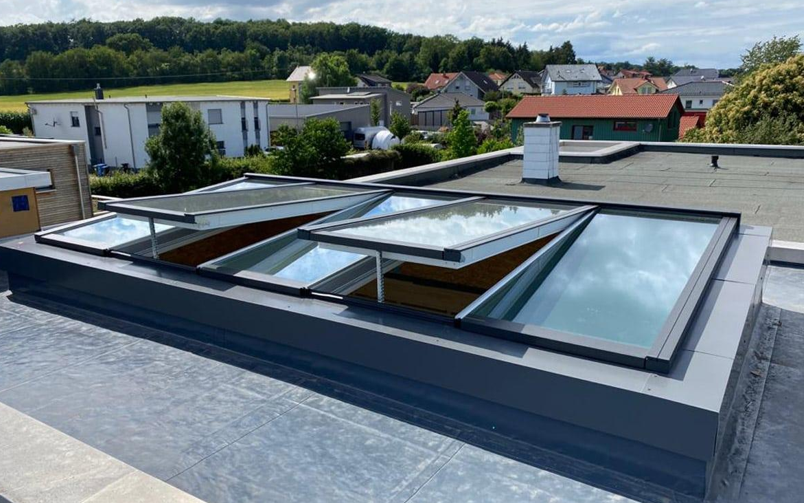
An opening design adds another function: ventilation. Depending on the product, the rooflight may be opened manually or operated with an electric control system. This can help release warm or humid air, particularly in kitchens, bathrooms and busy workspaces.
For larger spaces, several smaller rooflights may provide a more balanced spread of daylight than one very large unit. The best arrangement depends on the room layout, roof structure and desired level of illumination.
Understanding Different Opening Methods
The opening mechanism affects how convenient the rooflight is to use.
Manual rooflights can be operated with a handle or pole and may suit rooms where the unit is within easy reach. Electric versions are more convenient for higher ceilings or larger installations. Some systems can be controlled with wall switches or remote controls.
Another consideration is the amount of ventilation required. A rooflight that opens only slightly will provide a different airflow level from one designed with a wider opening angle. Manufacturers normally provide opening dimensions and ventilation information, which should be checked before purchasing.
The opening mechanism should also be suitable for the rooflight’s position. A unit installed over a staircase, high ceiling or commercial workspace may benefit from an electrically operated system rather than manual operation.
Choosing Glazing for Daylight and Comfort
Glazing has a direct effect on how the room looks and performs. Clear glazing provides strong daylight transmission, while translucent options can diffuse light and reduce direct views through the roof.
Thermal performance deserves attention too. A rooflight with suitable insulating properties can help reduce unwanted heat transfer between the interior and exterior. Double or triple glazing may be appropriate depending on the building, climate and specification.
Solar control can also be useful in rooms exposed to strong sunlight. Excessive solar gain may cause overheating during warmer months, particularly in spaces with several rooflights.
Safety is another consideration. Roof glazing should be selected according to the location and intended use, with appropriate safety characteristics for the installation.
Buying Opening Rooflights Online
Comparing products opening rooflights online can make it easier to review dimensions, glazing specifications, opening mechanisms and installation requirements before making a decision.
Product descriptions should be checked carefully rather than relying only on photographs. Look for information about overall dimensions, kerb compatibility, glazing type, thermal performance, ventilation opening and operating method.
It is also useful to check whether the rooflight is supplied as a complete system or requires additional components. Flashings, upstands, controls and other accessories may be necessary depending on the roof construction.
Accurate measurements are essential. The structural opening, rooflight dimensions and kerb details should all correspond with the manufacturer’s installation requirements.
Where Shop Opening Rooflights Can Be Useful
Buildings such as retail units, offices and workshops often need both daylight and ventilation. Shop opening rooflights can provide overhead daylight while allowing controlled airflow without taking valuable space away from walls.
Commercial installations may have additional requirements relating to fire safety, access, security, energy performance and building regulations. The specification should therefore be reviewed with the building’s intended use in mind.
For larger commercial spaces, multiple units can be positioned across the roof to distribute daylight more evenly. The final layout should take account of structural members, mechanical equipment, roof drainage and other services.
Positioning and Installation
The location of opening rooflights can influence both daylight distribution and ventilation. A rooflight placed directly above a frequently occupied area may provide stronger visual benefits, while positioning near the highest part of a room can assist with the release of warm air.
Installation quality is just as important as the rooflight itself. The roof opening needs to be correctly prepared, and the roof membrane or covering must be properly connected to the rooflight system. Poor detailing around the opening can create water ingress, condensation or heat-loss problems.
Flat roofs also need effective drainage. The installation should not interfere with the movement of rainwater toward outlets and drainage channels.
A qualified installer can check the existing roof construction and confirm whether reinforcement, a suitable kerb or other preparation is required.
Ventilation and Indoor Air Quality
Opening rooflights can contribute to natural ventilation by allowing warm air to escape through the roof. This can be particularly useful because warm air naturally rises.
In kitchens and bathrooms, ventilation needs may be greater because of steam, moisture and odours. A rooflight can support airflow, although it should not automatically be treated as a replacement for any required mechanical extraction system.
The size and opening angle influence airflow, so ventilation performance should be considered during product selection rather than after installation.
Selecting the Right Size
The appropriate rooflight size depends on the room, available roof area and amount of daylight required. A very large unit is not necessarily the best choice. Several appropriately positioned rooflights can sometimes create a more even lighting effect.
Room dimensions, ceiling height and interior finishes can also influence how daylight spreads. Light-coloured surfaces generally reflect more light, while darker finishes absorb more of it.
The roof structure must also be considered before enlarging an opening. Existing joists, beams, insulation and services can restrict where a rooflight can safely be installed.
An Opening Skylight for Different Building Types
An opening skylight can suit many applications, from residential extensions to offices and commercial premises. The right specification will depend on the building’s purpose, roof design and ventilation needs.
For a home extension, ease of operation, thermal performance and appearance may be priorities. In a workplace, ventilation control, durability and maintenance may receive greater attention.
Regardless of the building type, the rooflight should be selected as part of the overall roof design rather than treated as an isolated component.
See also: How Custom Apparel Businesses Scale with DTF Transfers
Maintenance and Long-Term Use
Regular inspection helps keep an opening rooflight working correctly. Moving parts should be checked for signs of wear, while seals and surrounding roof details should be inspected for deterioration.
Glass or glazing surfaces should be cleaned according to the manufacturer’s recommendations. Dirt and debris can reduce the amount of daylight entering the room.
For electrically operated systems, controls and motors should also be checked periodically. Any unusual noise, restricted movement or visible damage should be investigated before the problem becomes more serious.
A well-specified and correctly installed rooflight can provide useful daylight and ventilation for many years. Careful attention to glazing, opening method, roof compatibility, drainage and maintenance will help ensure the installation performs as intended.