ByJohn A
Steam Turbine Bucket Repair: A Practical Guide to Inspection, Damage and Restoration
Steam turbines operate under demanding conditions. High temperatures, pressure, rotational speed, vibration, and repeated thermal cycles can gradually affect the components responsible for converting steam energy into mechanical power. Among these components, turbine buckets are exposed to substantial mechanical and thermal stresses, making their condition a major concern during maintenance.
Steam turbine bucket repair involves more than fixing visible surface damage. A proper repair process begins with identifying the type and extent of deterioration, determining whether the component can safely return to service, and selecting a repair method that preserves the original design requirements.
Why turbine buckets require regular inspection
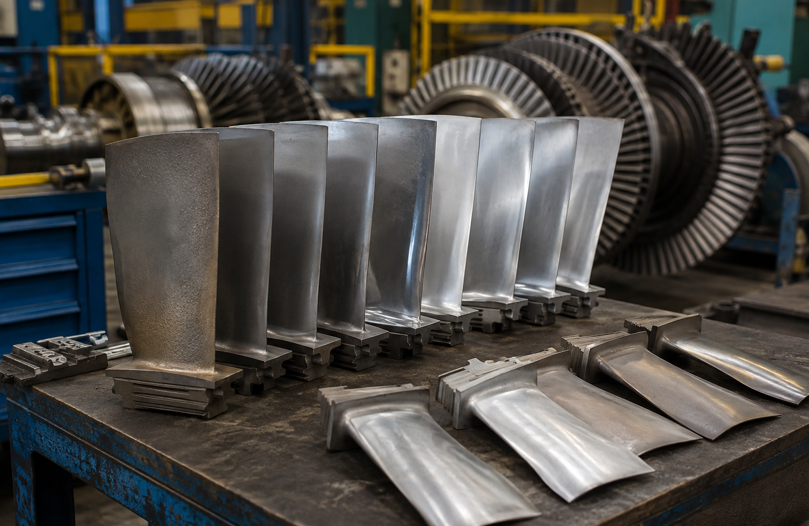
Turbine buckets, often referred to as blades in many maintenance environments, interact directly with the steam flow. Their aerodynamic shape allows them to extract energy from expanding steam as the rotor turns.
Over time, several forms of damage can develop. Erosion may occur when moisture droplets or contaminants strike the bucket surface at high velocity. Corrosion can affect both the surface and underlying material. Foreign-object damage may create dents, cracks, or localized deformation. Thermal cycling can contribute to fatigue, while excessive vibration can increase stress around attachment areas.
Small defects should not automatically be treated as minor problems. A crack near a highly stressed region can present a greater concern than a larger cosmetic defect in a low-stress area. Inspection therefore needs to consider both the physical appearance of the component and its operating environment.
Common signs of bucket damage
Maintenance personnel generally look for several warning signs during turbine inspections:
- Surface pitting or erosion
- Cracks around airfoil or attachment areas
- Distortion of the airfoil profile
- Corrosion or material loss
- Fretting around root or mounting surfaces
- Excessive wear at contact points
- Evidence of foreign-object impact
- Changes in surface finish or coating condition
Inspection techniques can include visual examination, dimensional checks, dye penetrant testing, magnetic particle inspection, ultrasonic testing, and other non-destructive examination methods. The appropriate method depends on the material, component design, suspected defect, and applicable maintenance requirements.
How the repair process is assessed
A repair decision should begin with an engineering assessment rather than the repair method itself. Inspectors need to establish the location, depth, and nature of the defect. Measurements are compared against approved limits or applicable technical documentation.
Some damage may be suitable for controlled blending, machining, material restoration, or other approved corrective procedures. More serious defects may require replacement of the component rather than repair.
Material condition also matters. Repeated exposure to elevated temperatures can change mechanical properties over time. A component that appears visually acceptable may still require closer examination before being returned to operation.
This is why steam turbine blades repair should be performed according to documented procedures and component-specific requirements rather than relying solely on general workshop practices.
Selecting a repair facility
The capabilities of a steam turbine repair company can vary considerably. Before sending components for refurbishment, operators can examine the facility’s experience with the relevant turbine type, inspection capabilities, machining equipment, welding or material restoration processes, balancing services, and quality-control procedures.
Documentation is another useful consideration. A repair facility should be able to provide clear records covering inspection findings, repair activities, dimensional checks, and final examination. Traceability helps maintenance teams understand what work was performed and supports future maintenance decisions.
Experienced steam turbine repair experts can also help determine whether repairing a damaged component is technically and economically sensible. Their assessment may consider component history, operating conditions, defect severity, remaining service life, and the consequences of continued operation.
Repair methods depend on the defect
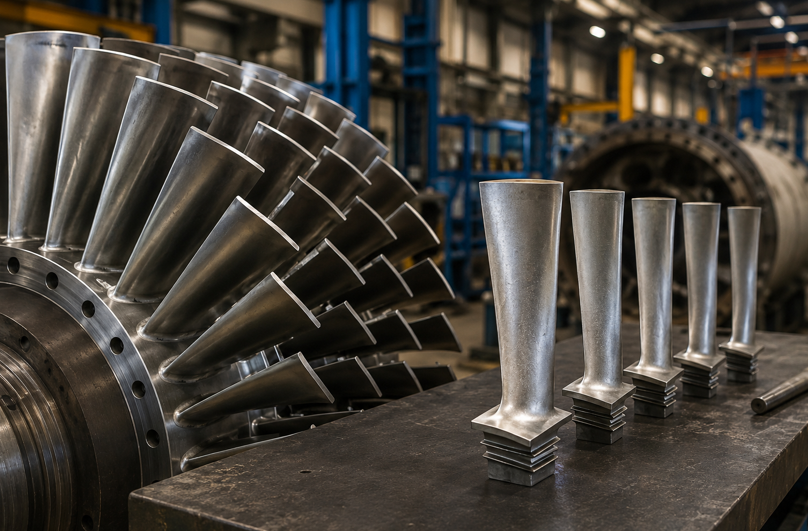
No single repair technique applies to every turbine bucket. Minor surface deterioration may require controlled material removal and restoration of the original profile. More substantial material loss can require an approved material restoration process followed by machining and inspection.
Cracks require particular attention. The affected area may need to be removed to a defined extent, followed by an approved repair procedure where permitted. Afterward, non-destructive examinations can verify that unacceptable indications have not remained.
Coatings may also be used on selected components to provide protection against erosion, corrosion, or other operating conditions. Their application needs to follow the specifications applicable to the component and service environment.
Dimensional accuracy is critical throughout the process. Even a visually acceptable repair can create problems if the repaired area changes the intended airfoil geometry, attachment dimensions, clearances, or rotor balance.
How gas turbine work differs
Steam turbines and gas turbines operate on different thermodynamic principles, so their maintenance requirements are not identical. Gas turbines expose components to combustion gases and very high temperatures, creating different material and coating requirements.
Simple cycle turbine repair can involve inspection and restoration of equipment operating without a heat-recovery steam generator or combined-cycle arrangement. Maintenance planning may focus heavily on the condition of rotating components, combustion-related hardware, bearings, seals, and other equipment specific to the plant configuration.
A simple cycle gas turbine repair program can involve specialized inspection methods because hot-section components experience severe thermal loading. Repairs may include coating restoration, dimensional correction, crack assessment, and replacement of components that have exceeded allowable limits.
Understanding these differences prevents maintenance teams from applying repair assumptions from one turbine technology to another.
Inspection after repair
Repair work should not be considered complete when machining, welding, blending, or material restoration has finished. Post-repair inspection provides evidence that the component meets the required criteria.
Depending on the repair, this may include dimensional inspection, surface examination, non-destructive testing, hardness checks, coating inspection, or other verification procedures. Components may also require final cleaning before assembly.
Rotor-related work may require additional checks to confirm that repaired components have not introduced unacceptable weight or dimensional differences. The exact requirements depend on the turbine design and maintenance documentation.
Extending service life through maintenance
A well-planned inspection program can identify deterioration before it develops into a larger equipment problem. Operators can use inspection history to identify recurring damage patterns and investigate possible causes, such as steam quality, operating conditions, vibration, foreign-object entry, or inadequate clearances.
Repair decisions should also consider the component’s service history. A bucket that has already undergone several repairs may have different remaining repair options from a component undergoing its first refurbishment.
Good maintenance records make these decisions easier because they provide a history of previous defects, repairs, inspections, and operating exposure.
See also: How Custom Apparel Businesses Scale with DTF Transfers
Final considerations
Turbine bucket condition has a direct relationship with equipment reliability and maintenance planning. A sound repair decision combines accurate inspection, engineering evaluation, suitable repair techniques, dimensional control, and post-repair verification.
Steam turbine bucket repair is therefore best treated as a controlled engineering process rather than a simple workshop task. Careful assessment can help operators distinguish between damage that can be restored and conditions that call for component replacement, while proper documentation provides a useful record for future inspections and maintenance planning.