ByJohn A
How Secure Wiping Can Become a Competitive Advantage for Device Resellers
The refurbished smartphone market is becoming increasingly competitive. Device resellers are no longer competing only on price, device condition, or inventory availability. Customers and business partners also expect a reliable process for handling the information stored on devices before those phones reach their next owners.
This makes secure data wiping more than a back-office requirement. When implemented effectively, it can become part of a reseller’s operational advantage. Secure mobile data erasure software, such as solutions offered by CellDe, can help businesses standardize device wiping, reduce manual effort, process larger volumes, and maintain clear records of completed erasure activities.
For resellers looking to differentiate their operations, treating data security as an integral part of the device lifecycle can strengthen both efficiency and customer confidence. By incorporating a structured approach to data erasure, businesses can create a smoother refurbishment process while demonstrating that protecting sensitive information remains a priority.
Why Secure Wiping Matters to Device Resellers
Every smartphone entering a resale operation has a previous digital history. Devices may come from consumer trade-ins, employee returns, corporate refresh programs, or other channels, and each may require a consistent process before being prepared for resale.
As volumes increase, manual approaches can become difficult to manage. A structured wiping process allows businesses to make data sanitization a repeatable part of their workflow while creating greater visibility into the status of individual devices.
Protect the Device Lifecycle From the Start
Data erasure should be considered during intake rather than treated as the final task before resale. When it is built into the workflow from the beginning, teams can establish clear rules for when a device is ready to be wiped and when additional steps are required first.
For example, a device may need to complete diagnostics or customer data transfer before it enters the erasure stage. Once those steps are complete, the phone can be moved into a controlled wiping process.
This approach can help businesses:
- Create consistent processing procedures
- Reduce missed workflow steps
- Establish clearer device statuses
- Improve technician accountability
- Prepare devices more systematically for resale
A structured lifecycle makes secure wiping part of normal operations rather than an isolated technical activity.
Turn Data Security Into a Differentiator
Many resellers focus their differentiation strategy on device price, grading, warranties, or inventory selection. Data handling offers another opportunity to demonstrate operational maturity.
A reseller that can clearly explain how devices are processed before resale can give customers and business partners greater insight into what happens behind the scenes.
The message is simple: the device is not merely cleaned and tested; it goes through a defined process designed to prepare it for its next user. Communicating this approach responsibly can help a reseller build a stronger reputation around quality and process transparency.
How Secure Mobile Data Erasure Software Improves Efficiency
Competitive advantage is not only about customer perception. Operational efficiency directly affects how quickly and economically a reseller can move devices through its facility.
When wiping relies heavily on manual procedures, technicians may spend substantial time initiating processes, monitoring individual devices, and recording outcomes. Secure mobile data erasure software can automate repetitive activities and create a more standardized workflow.
Reduce Repetitive Manual Tasks
Processing a small number of devices manually may be manageable, but the workload changes dramatically at higher volumes. If employees must perform the same steps on hundreds of smartphones, small inefficiencies can accumulate into significant processing delays.
Software-assisted wiping can simplify repetitive activities and allow teams to manage multiple devices more efficiently. Instead of treating every phone as a separate task, businesses can organize devices into batches and monitor progress from a centralized environment.
This can allow technicians to focus on higher-value activities such as:
- Investigating failed processes
- Performing quality checks
- Reviewing diagnostic results
- Handling unusual device conditions
- Preparing completed devices for the next stage
Automation therefore supports productivity without removing the importance of human oversight.
Improve Processing Consistency
Consistency is particularly important when devices are processed across multiple employees or locations. A process that depends on individual technician habits can produce variations in how devices are handled.
Secure mobile data erasure software can provide a defined workflow that teams can follow repeatedly. Standardization can make employee training easier and give managers greater confidence that devices are moving through the same core process.
A consistent approach also simplifies troubleshooting. If a device fails to complete the expected process, teams have a known workflow against which they can investigate the issue.
Why Certified Data Erasure Can Build Trust
Efficiency may help a reseller process more devices, but documentation can help demonstrate that the process was completed correctly. This is where certified data erasure becomes particularly valuable.
A documented erasure process can provide a traceable record associated with the device. For businesses handling corporate returns, trade-ins, or large inventories, having accessible records can make device management more transparent.
Create an Audit-Friendly Process
When a reseller handles large volumes of devices, it can be difficult to answer basic questions about individual phones without reliable records. When was the device wiped? Did the process complete successfully? Which device was associated with the result?
Digital certificates and processing records can provide structured answers to these questions. They can also help teams identify completed devices and distinguish them from units that require additional attention.
Useful information may include:
- Device identification details
- Processing date and time
- Erasure outcome
- Certificate information
- Relevant workflow status
Maintaining these records can strengthen internal processes and provide useful documentation when reviewing device histories.
Make Data Security Part of the Customer Experience
Data security is often invisible to the customer because it happens behind the scenes. However, resellers can use responsible communication to explain that secure processing is part of how devices are prepared for their next owner.
This does not require overwhelming customers with technical information. A clear explanation of the reseller’s process can demonstrate that data handling is treated as an important stage of device preparation.
CellDe’s Smart Wipe solution is designed to support secure mobile device wiping, including capabilities for bulk processing and certified reporting. For resellers, integrating these capabilities into their operations can help turn data erasure into a more structured and demonstrable process.
Use Secure Wiping to Support High-Volume Operations
As resale businesses grow, the ability to process more devices without creating additional operational complexity becomes increasingly important. Secure wiping should therefore be designed to work alongside the rest of the refurbishment pipeline.
The most effective approach connects wiping with device intake, diagnostics, data transfer, grading, and final quality checks. This reduces unnecessary handoffs and makes it easier for teams to understand the status of every device.
Process Devices in Batches
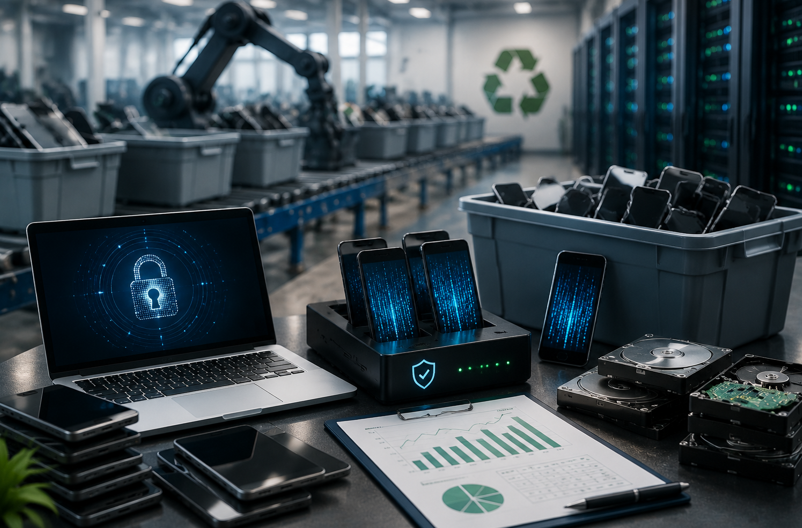
Batch processing can help resellers handle repetitive wiping activities more efficiently. Instead of connecting, initiating, and monitoring every phone independently, teams can process groups of devices through a coordinated workflow.
This approach can be particularly useful following large trade-in campaigns or corporate device refreshes. A batch can move through the appropriate processing stage while technicians monitor for exceptions.
Potential operational benefits include:
- Higher processing throughput
- Less repetitive technician activity
- Easier workload management
- Faster identification of exceptions
- More consistent device handling
CellDe Smart Wipe supports bulk wiping capabilities that can fit into high-volume device-processing environments. When combined with defined procedures, batch processing can help resellers make secure wiping a scalable part of their operation.
Connect Wiping With Diagnostics and Grading
A phone should not necessarily move directly from intake to wiping without considering the wider workflow. Depending on the operation, diagnostic testing, verification, and customer data transfer may need to happen before the device is fully prepared for resale.
Connecting these stages creates a logical device journey. Once required testing and transfer activities are complete, the device can enter the wiping stage and subsequently move toward grading and final preparation.
This reduces unnecessary movement between teams and helps ensure that processing activities occur in the right order. The result is a more predictable path from returned device to resale-ready inventory.
Turn Secure Wiping Into an Operational Advantage
The strongest competitive advantages are usually created when technology improves both internal operations and the customer experience. Secure wiping can contribute to both when it is implemented as part of a broader device lifecycle strategy.
Rather than viewing data erasure as a cost center, resellers can treat it as a capability that supports efficiency, traceability, and trust.
See also: Why Mumbai Businesses Need a Strong Digital Strategy
Measure the Impact of Your Wiping Process
Resellers should measure their wiping operation just as they measure other stages of the refurbishment pipeline. The right metrics can reveal whether the current process is supporting or slowing down overall throughput.
Useful measurements may include:
- Average wipe time per device
- Devices processed per batch
- Successful completion rates
- Number of manual interventions
- Processing delays or exceptions
- Time from erasure completion to resale readiness
These metrics can identify bottlenecks and provide a baseline for improvement. If a workflow change reduces processing time without compromising the required process controls, the business gains a measurable operational benefit.
Build a Reputation Around Process Quality
Price remains important in the resale market, but operational quality can provide another way to stand out. A reseller that demonstrates consistent diagnostics, secure data handling, transparent processing, and reliable documentation can create a stronger overall value proposition.
This is especially relevant when working with organizations that expect structured device lifecycle processes. Clear procedures and documentation can make the reseller appear more prepared to handle larger and more complex device programs.
Over time, process quality can become part of the business identity rather than simply an internal operational detail.
Prepare for the Next Stage of Device Resale
The device resale industry continues to evolve as more smartphones move through trade-in, refurbishment, and second-life channels. Businesses that want to remain competitive need workflows capable of handling greater volumes while maintaining consistency.
Secure data erasure is one important part of that transformation. When integrated with diagnostics, verification, transfer, grading, and reporting, it becomes a component of a broader technology-enabled resale strategy.
Create a Smarter Device Processing Workflow
A modern resale workflow can follow a structured sequence:
- Device intake and identification
- Initial verification
- Functional diagnostics
- Required data transfer
- Secure data erasure
- Erasure documentation
- Grading and quality control
- Final resale preparation
Each stage should have a defined purpose and clear completion status. Automation can support repetitive tasks, while employees remain responsible for exceptions, quality decisions, and overall process management.
The objective is to create a workflow that can grow with the business without creating unnecessary manual complexity.
Conclusion
Secure wiping can become a genuine competitive advantage when device resellers move beyond viewing it as a final technical task. Secure mobile data erasure software can help standardize processes, support bulk device handling, reduce repetitive work, and improve visibility across high-volume operations.
Certified data erasure can add another layer of value by creating documented records that help businesses demonstrate how devices were processed. When secure wiping is connected with diagnostics, verification, data transfer, grading, and reporting, resellers can create a more efficient and traceable device lifecycle.
As the second-life smartphone market continues to expand, operational excellence will become increasingly important. By making data security part of the overall resale strategy, CellDe provides an example of how dedicated wiping technology can support businesses seeking a smarter, more scalable approach to device processing.