ByJohn A
How Can a Portable Evaporative Air Cooler Keep Large Spaces Comfortable?
Large spaces can become uncomfortable quickly when heat builds up faster than air can circulate. Warehouses, workshops, event venues, commercial facilities, and semi-open areas often need strong airflow without the complexity of a permanently installed cooling system.
A portable evaporative air cooler can offer a practical approach for these environments. Instead of relying on a closed refrigeration cycle, evaporative cooling uses water and airflow to produce cooler air. Portable units can also be positioned closer to the areas where cooling is needed, making them useful for focused and flexible applications.
What Is a Portable Evaporative Air Cooler?
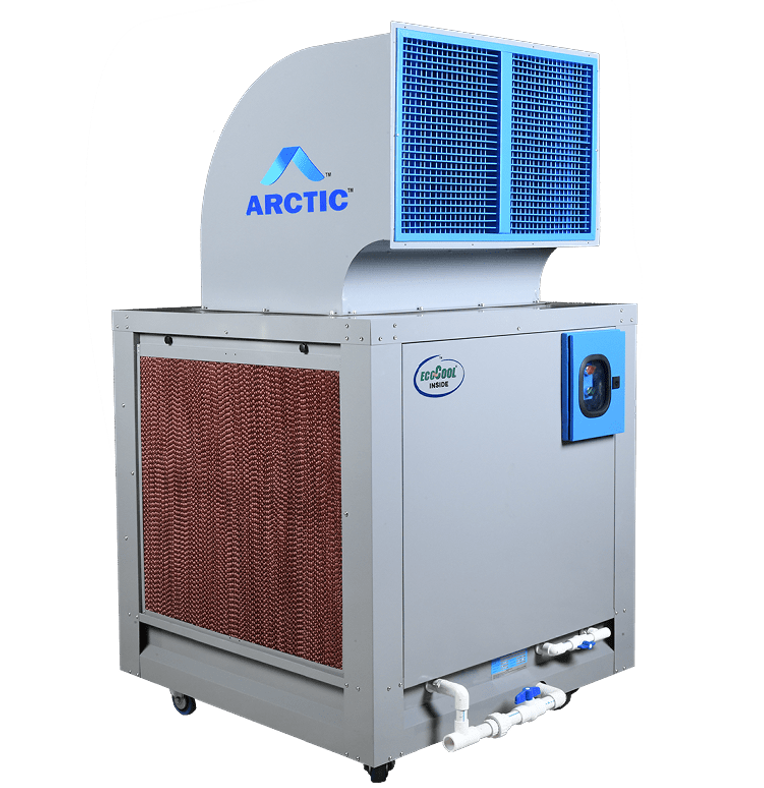
A portable evaporative air cooler draws warm surrounding air through water-moistened cooling pads. As water evaporates, heat is removed from the air, and the resulting cooler air is moved into the surrounding space.
Unlike conventional air conditioning, evaporative cooling does not depend on refrigerant-based cooling. It is particularly suited to environments where fresh air movement and ventilation are possible.
How Does Evaporative Cooling Work?
The process begins as air enters the cooler through its intake area. Water circulates through the cooling pads, keeping them wet. The incoming air passes across these pads, allowing evaporation to reduce the air temperature before the blower or fan distributes the cooled air.
Air movement is an important part of this process. Evaporative cooling performs best when the cooled air can move through the space and warmer air can leave. For this reason, ventilation and the surrounding environment should be considered before selecting a unit.
What Makes Portable Cooling Useful?
Portability gives businesses more control over where cooling is delivered. A unit can be positioned near a workstation, production area, seating zone, or other location requiring additional airflow.
The Free Flow range on the manufacturer’s website is designed as plug-and-play equipment on castor wheels for indoor and outdoor applications. Its product range includes portable and spot cooling options designed for commercial and industrial environments.
This flexibility can be valuable when cooling requirements change throughout the day or when installing permanent ductwork is not practical.
Where Can Portable Air Coolers Be Used?
The usefulness of portable evaporative cooling extends across many commercial and industrial settings. The right unit depends on the space, ventilation, heat load, and required airflow.
Commercial and Industrial Areas
Warehouses, workshops, factories, kitchens, production areas, and commercial facilities can experience significant heat buildup. Equipment, machinery, lighting, and high occupancy can increase the need for effective air movement.
Portable cooling can provide targeted airflow without requiring the entire building to be converted into a centrally cooled environment.
The manufacturer’s top discharge models are listed for applications including offices, restaurants, commercial complexes, warehouses, workshops, manufacturing facilities, textile mills, automotive facilities, and other industrial environments.
Events and Outdoor Spaces
Cooling requirements can also arise in spaces that are not fully enclosed. Banquets, marriage halls, gymnasiums, covered outdoor areas, and temporary event spaces may benefit from portable equipment that can be positioned according to the layout.
A portable system can be especially useful where airflow needs to reach particular areas rather than being distributed through a permanent duct network.
What Factors Affect Portable Cooler Performance?
Buying a cooler based only on the physical size of the machine can lead to poor results. Cooling performance depends on several environmental and application-specific factors.
The first consideration is the size of the area. Larger spaces generally require greater airflow. Ceiling height also matters because a high-volume space can require more air movement than a smaller room with the same floor area.
Ventilation is equally important. Evaporative cooling introduces fresh, cooled air into the environment, so there needs to be a way for warm air to escape. A sealed room is generally not the ideal environment for this type of cooling.
Humidity also affects performance. Evaporative cooling relies on evaporation, so its effectiveness can change as moisture levels in the surrounding air increase.
Placement matters as well. The cooler should be positioned so that its airflow reaches the intended area without being blocked by equipment, walls, partitions, or other obstacles.
How Should You Choose the Right Portable Cooler?
Start by identifying the cooling area and the type of environment. Then compare the airflow capacity, cooling requirements, power supply, water capacity, physical dimensions, and expected operating conditions.
The Free Flow top discharge range provides several capacity options. Its published specifications include models with airflow ranging from 2,500 CMH to 26,000 CMH, with stated cooling areas from approximately 800 to 5,000 square feet and air throw ranging from 16 to 60 metres, depending on the model.
These figures demonstrate why model selection should be based on the application rather than simply choosing the largest available unit.
Water capacity should also be considered. The listed models have tank capacities ranging from 60 litres to 190 litres. A larger tank can reduce the frequency of refilling, which may be useful during extended operation.
Construction is another factor for commercial environments. The top discharge range uses coated galvanised steel construction, while the specifications also identify heavy-duty industrial construction.
Power requirements should be checked before installation or deployment, particularly when using larger models or multiple units.
How Can You Maintain a Portable Evaporative Cooler?
Maintenance has a direct effect on cooling performance and equipment life. Water, dust, and airborne particles can gradually affect cooling pads, tanks, filters, and other components.
The water tank should be cleaned regularly to prevent unwanted buildup. Fresh water should be used according to the manufacturer’s recommendations, and stagnant water should not be left in the system for extended periods.
Cooling pads also require attention. Dust accumulation can restrict airflow and reduce the effectiveness of evaporation. Periodic inspection helps identify areas requiring cleaning or replacement.
The airflow path should remain clear. Fans, blowers, grills, and intake areas should be inspected so that dust or obstructions do not interfere with performance.
Electrical components should also be checked during scheduled maintenance. For commercial and industrial equipment, preventive servicing is preferable to waiting until cooling performance declines or a component fails.
What Are the Advantages and Limitations of Portable Evaporative Cooling?
Portable evaporative cooling offers several practical advantages. It can provide strong airflow, flexible positioning, and focused cooling without requiring extensive ductwork. The top discharge range specifically uses a curved scroll and grill to improve airflow and air management, and the manufacturer describes the units as ductless and plug-and-play.
Energy use can also be an important consideration. Evaporative cooling operates differently from conventional air conditioning and can have lower operating costs in appropriate conditions. The manufacturer states that its evaporative cooling solutions can have running costs below 90% of air conditioning.
There are limitations. Evaporative cooling depends on evaporation, which means humidity affects its performance. Adequate ventilation is also important because cooled air needs to circulate while warmer air exits the space.
For a fully enclosed environment requiring precise temperature and humidity control, another cooling technology may be more appropriate. Portable evaporative cooling is better evaluated according to the actual operating environment rather than treated as a universal replacement for air conditioning.
Questions to Ask Before Buying a Portable Air Cooler
Before purchasing, consider the size and layout of the space, the desired cooling area, and the amount of airflow required.
Ask whether the unit can deliver sufficient air throw for the intended location. Check the water tank capacity and understand how frequently it may need refilling during regular operation.
Power requirements should match the available electrical supply. Maintenance access is another practical consideration, particularly for commercial environments where equipment may operate for long periods.
It is also useful to understand whether the cooler is intended for spot cooling, general airflow, or a combination of both. Different applications can require different discharge configurations.
The product specifications should be reviewed carefully before selecting a model. For instance, the top discharge range includes axial and centrifugal blower configurations depending on model, along with different tank capacities, dimensions, power requirements, and airflow levels.
For businesses evaluating a cooling requirement, speaking with the supplier can help match the equipment to the space rather than relying solely on a general coverage estimate.
Arctic provides portable, spot, ducted, and indirect evaporative cooling solutions for industrial, commercial, and residential applications.
Frequently Asked Questions About Portable Evaporative Air Coolers
Are portable evaporative coolers suitable for large areas?
Yes, selected commercial and industrial models can be designed for substantial areas. The appropriate capacity depends on airflow requirements, space dimensions, ventilation, heat load, and humidity.
Can portable air coolers be used outdoors?
Portable evaporative coolers can be suitable for outdoor and semi-open applications when the equipment is designed for that use. Open-air conditions can allow the required circulation for evaporative cooling.
Do evaporative coolers consume less electricity than air conditioners?
Evaporative coolers use a different cooling process from refrigeration-based air conditioning. Their operating costs can be lower in suitable conditions, although actual consumption depends on the model, operating duration, and application.
How often should a portable air cooler be cleaned?
Cleaning frequency depends on water quality, dust levels, operating hours, and the environment. Cooling pads, tanks, intake areas, and airflow components should be inspected regularly and maintained as needed.
Does humidity affect evaporative cooling performance?
Yes. Evaporative cooling depends on water evaporation, so higher humidity can reduce the amount of additional moisture the air can absorb. Proper ventilation is also important for maintaining effective cooling.
Conclusion
Choosing a portable evaporative cooler is less about finding the biggest machine and more about matching airflow, cooling capacity, water capacity, placement, and environmental conditions to the application.
For large commercial and industrial spaces, portability can make targeted cooling easier to manage, while ductless operation can simplify deployment where permanent ducting is unnecessary. Maintenance also plays a major role in keeping airflow and cooling performance consistent.
Businesses should assess the space, ventilation, humidity, operating hours, and required air throw before selecting equipment. Reviewing technical specifications and getting application-specific guidance can help ensure the chosen cooler is appropriate for the intended environment.
For product or application-related assistance, businesses can use the manufacturer’s contact option to discuss their cooling requirements.